 Martial Boss
 Written By:
Steve MarlinUpdated:
Category:
BJJ.
Finding the best folding BJJ mats changed how I train at home. After years of driving to the gym for every session, I wanted a portable grappling mat that wouldn’t break my back or my budget.
I’ve tested several foldable jiu jitsu mats over the past two years, and I’m excited to share what actually works.
Whether you need a wrestling mat for home training or a travel-friendly option for seminars, this guide covers the top choices I’ve personally rolled on.

Over the years, I’ve trained on everything from yoga mats to makeshift carpet setups, and trust me, nothing beats proper folding BJJ mats when it comes to safety.
If you’re doing takedowns or guard transitions on hard floors, your spine will remind you why mats exist. A quality folding mat gives you cushioning, stability, and enough surface area for flowing drills without risking injuries.
You might be wondering: Do inflatable jiu jitsu mats actually work for BJJ? Surprisingly, yes. They feel similar to soft gym mats and give you the forgiveness you need for throws and breakfalls. Still, they’re different from tatami-style mats, so choosing the right type depends on your space and training style.
Before diving into the product reviews, here are the factors I kept in mind during testing:
Now let’s get into the best folding BJJ mats I tested.
Disclosure: Some links below are Amazon affiliate links, which means I may earn a commission at no additional cost to you. As an Amazon Associate, I earn from qualifying purchases.
After extensive testing, these are the grappling mats I actually recommend to my training partners and students.
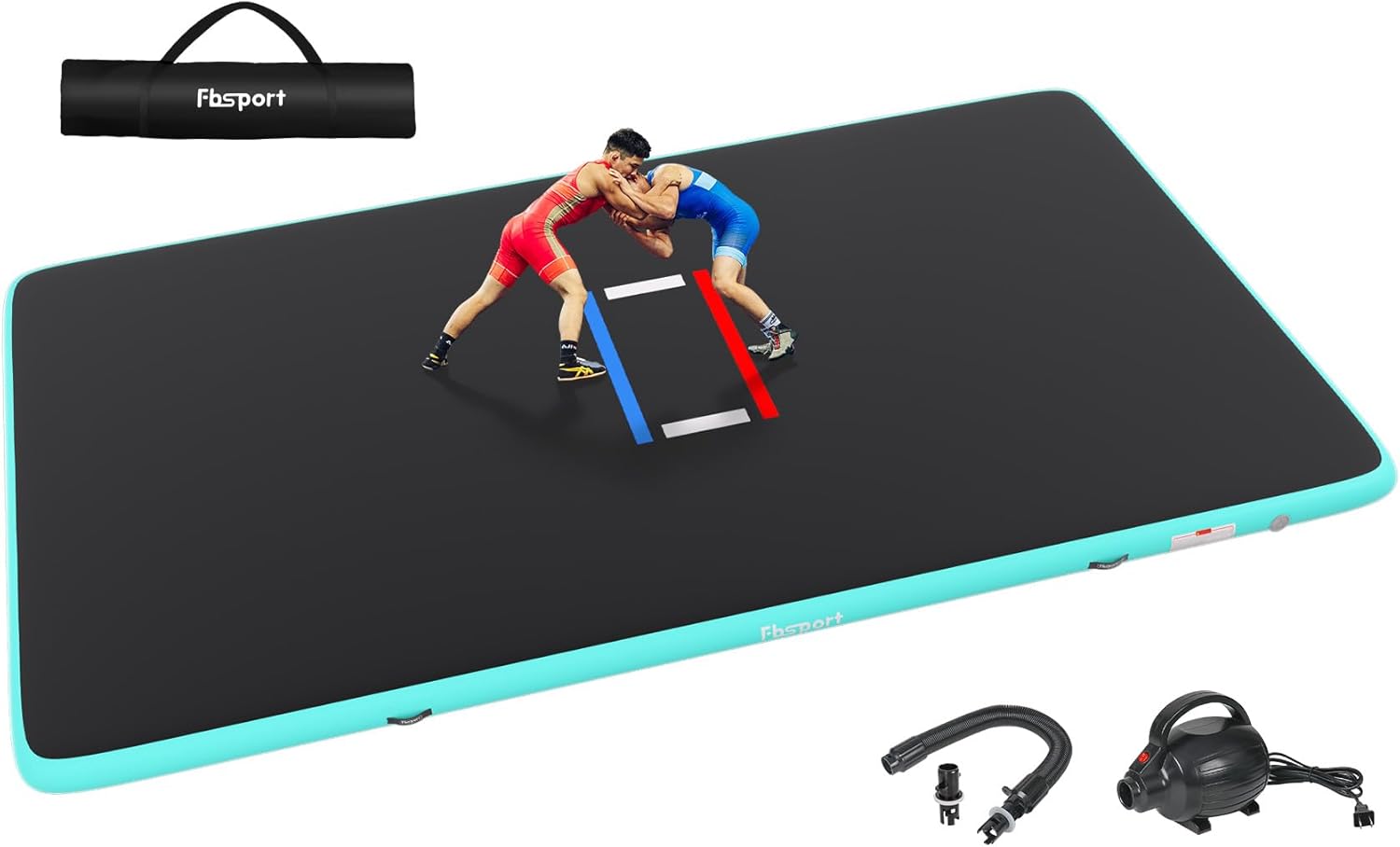
I was skeptical about inflatable mats until I tried this one. Setting it up for the first time in my garage, I expected something flimsy. What I got instead surprised me.
My Experience
The 10ft version fits perfectly in my home gym space. Inflation takes about 3 to 4 minutes with the included electric pump. That’s faster than unfolding and connecting puzzle mats. The PVC material feels substantial, not like a pool toy. I’ve been using mine for six months now, and it still holds air perfectly between training sessions.
What really impressed me was the cushioning. At 4 inches thick, this mat absorbs throws better than some permanent gym flooring I’ve trained on. My knees thank me every time I practice knee-on-belly transitions or takedowns. The surface has enough texture for gi grips without being rough on skin during no-gi drills.
Storage is where this inflatable jiu jitsu mat shines. When deflated, it rolls into a bag smaller than my gym duffel. I’ve taken it to friends’ houses for training sessions and even brought it to an outdoor seminar last summer. Try doing that with traditional foam mats.
What Stood Out
The reinforced seams handle stress well. I’ve had multiple training partners simultaneously, and there’s no sagging or weak spots developing. The waterproof surface means cleanup is just a quick wipe with disinfectant. No more worrying about sweat soaking in.
Temperature stability surprised me too. On hot days, the mat doesn’t get uncomfortably warm like foam alternatives. In winter, it’s not freezing cold either. This makes year-round garage training actually pleasant.
Who It’s Best For
This works perfectly if you train at home occasionally or need a portable option for seminars and travel. The size options mean whether you’re working solo drills or training with a partner, there’s a version that fits. I recommend the 10ft or 13ft sizes for BJJ. The 5ft is really only suitable for solo movement drills or kids.
Honest Drawbacks
It does slide on smooth floors during intense rolling. I solved this with a yoga mat underneath for grip. Also, you need to store it properly deflated. Leaving it inflated long-term in direct sunlight can degrade the material faster. Not a dealbreaker, but worth knowing.
My Verdict
This inflatable wrestling mat offers the best combination of portability and protection I’ve found. It’s ideal for home practitioners who want gym-quality cushioning without permanent installation. The convenience factor alone makes it worth considering.
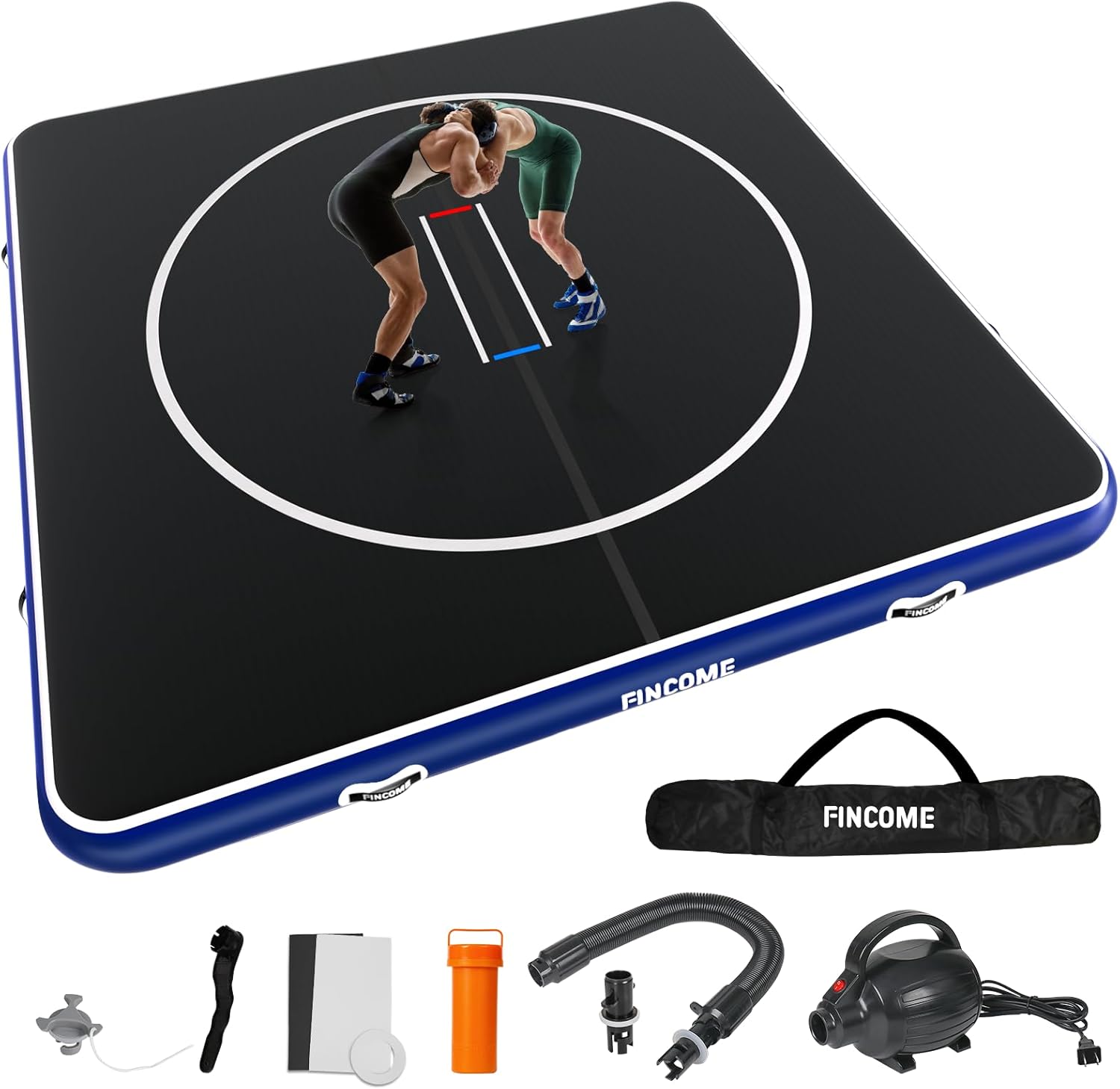
After trying the FBSPORT, I wanted to compare it against another inflatable option. The FINCOME landed in my garage a month later, and I was curious if the extra size options and different design would make a difference.
My Experience
Right away, I noticed the valve system felt more robust. Inflation and deflation happen slightly faster than other inflatable training mats I’ve used. The 13ft version gives me enough space to practice full sequences with a partner without constantly repositioning.
The 4-inch thickness provides excellent shock absorption. I practice a lot of wrestling-based takedowns in my training, and this mat handles them without bottoming out. My coach, who weighs about 220 pounds, tried several throws on it. No complaints about impact, which says something.
What I appreciate is how flat this stays when fully inflated. Some inflatable mats develop a slight crown in the middle. This one maintains an even surface across the entire area. That consistency matters when you’re drilling specific positions and don’t want uneven terrain affecting your technique.
What Stood Out
The PVC quality seems a step up. It resists scuff marks better than expected. After months of use, the surface still looks relatively new. The textured pattern provides good traction for both gi and no-gi grappling. I’ve done plenty of both, and neither feels slippery or too grabby.
Waterproofing is thorough. I accidentally left it outside during a light rain once (don’t recommend this, but it happened). After drying it off, zero water penetration. Still works perfectly. That durability gives me confidence for long-term use.
Who It’s Best For
If you’ve got the space and want a larger training area, the 16ft option is fantastic for multiple partners or teaching small group sessions. Home gym owners who train regularly will appreciate the quality construction. The size range accommodates everyone from solo practitioners to small training groups.
Honest Drawbacks
The larger sizes take up more space even when deflated compared to smaller mats. If storage is tight, consider the 10ft version. Also, the electric pump works well but is somewhat loud. Not apartment-friendly if you have thin walls and neighbors. Minor issues in the grand scheme, but worth mentioning.
My Verdict
This is a premium inflatable grappling mat that justifies its position among top choices. The quality construction and size variety make it suitable for serious home training. I’d choose this if I wanted the absolute best inflatable option and had adequate storage space.

Now we’re talking about a completely different style. This is a traditional roll-out mat, and Dollamur has a serious reputation in the martial arts community. I’ve trained on their mats in multiple gyms over the years, so getting one for home testing felt like reuniting with an old friend.
My Experience
The authentic tatami surface immediately feels familiar. It’s exactly what you’d find in a professional BJJ academy. That texture provides perfect friction for collar grips while still being smooth enough for no-gi work. This is the gold standard surface that other mats try to replicate.
At 1.25 inches thick, it’s thinner than the inflatable options. Does that matter? For BJJ-specific training, not really. This thickness is what competition mats use. Your body adapts, and honestly, it makes you more technical with your takedowns and sweeps. You learn to break fall properly rather than relying on excessive cushioning.
The roll-out design means setup is incredibly simple. Unroll it, and you’re ready. No inflation, no connecting pieces. When training time is limited, that convenience matters. I can have this ready in under 30 seconds.
What Stood Out
Durability is exceptional. Dollamur makes mats for schools and competition venues. This thing is built to withstand daily abuse from dozens of grapplers. My home use barely registers as wear on this beast. The edges are sealed properly, so there’s no peeling or separation happening.
The surface cleans easily and doesn’t retain odors like some foam mats. After sweaty training sessions, a quick wipe-down with mat cleaner keeps it fresh. That’s important when you’re training in a home environment where nobody wants gym smell lingering.
Weight distribution is stable. Unlike inflatable options, this stays exactly where you put it. No sliding, no adjusting mid-roll. That reliability lets you focus entirely on training rather than fighting your equipment.
Who It’s Best For
Serious practitioners who want authentic competition-level training mats at home. If you’re drilling daily and treating your home space like a mini academy, this is the right choice. Also great if you have a dedicated training space where you can leave it rolled out semi-permanently.
Honest Drawbacks
It’s heavy. At 50 pounds for a 5×10 mat, this isn’t something you’ll carry around easily. Storage requires significant space even when rolled. If you live in a small apartment or need truly portable solutions, this might not work. Also, the thinner profile means less cushioning for intense throwing practice.
My Verdict
This is the mat I recommend when someone asks what professionals use. It’s an investment in authentic training equipment that will last years. If portability isn’t your main concern and you want the real deal, Dollamur delivers exactly what serious grapplers need.

The square format of this mat caught my attention. Most grappling mats are rectangular, but this 10×10 design offers different spacing dynamics. I wanted to see if that made a practical difference in training.
My Experience
Setting this up in my garage, the square shape immediately felt different. There’s more room to move laterally without hitting edges. When practicing guard passes or working on movement drills, that extra side-to-side space helps. It’s not revolutionary, but it’s noticeable.
The 4-inch thickness provides solid impact protection. I’ve done everything from basic drilling to full-intensity sparring on this mat. It handles the abuse well. The PVC construction feels sturdy, and after several months, there’s no air leakage or material degradation.
What impressed me was the surface texture. It’s aggressive enough for good grip but not so rough that it causes mat burn. I train a lot of no-gi, and this balance matters. My skin doesn’t get torn up, but my hands don’t slip during scrambles either.
What Stood Out
The waterproof material really shines for outdoor training. I’ve used this in my backyard several times during nice weather. Morning dew or a bit of moisture doesn’t matter. Just wipe it down and start training. That versatility extends your training options beyond indoor-only sessions.
Inflation is quick and straightforward with the included pump. Deflation is equally easy. The carrying bag is functional and protects the mat during storage. Everything about the setup and breakdown process is user-friendly, even after an exhausting training session when you just want to collapse.
Who It’s Best For
This works great for practitioners who want versatility in training locations. The square shape benefits guard players and those working on circular movement patterns. If you train outdoors occasionally or want a mat that handles varied conditions, this is a solid pick.
Honest Drawbacks
The square format, while interesting, isn’t necessary for most training. Rectangular mats work fine for 99% of BJJ techniques. Also, at 10×10, it’s large enough that storage in tight spaces becomes challenging even when deflated. The pump is adequate but not the quietest option available.
My Verdict
A quality inflatable martial arts mat that offers good value and performance. The square design is a nice touch for certain training styles, though not essential. If the dimensions work for your space and you appreciate the outdoor capability, this delivers reliable performance.
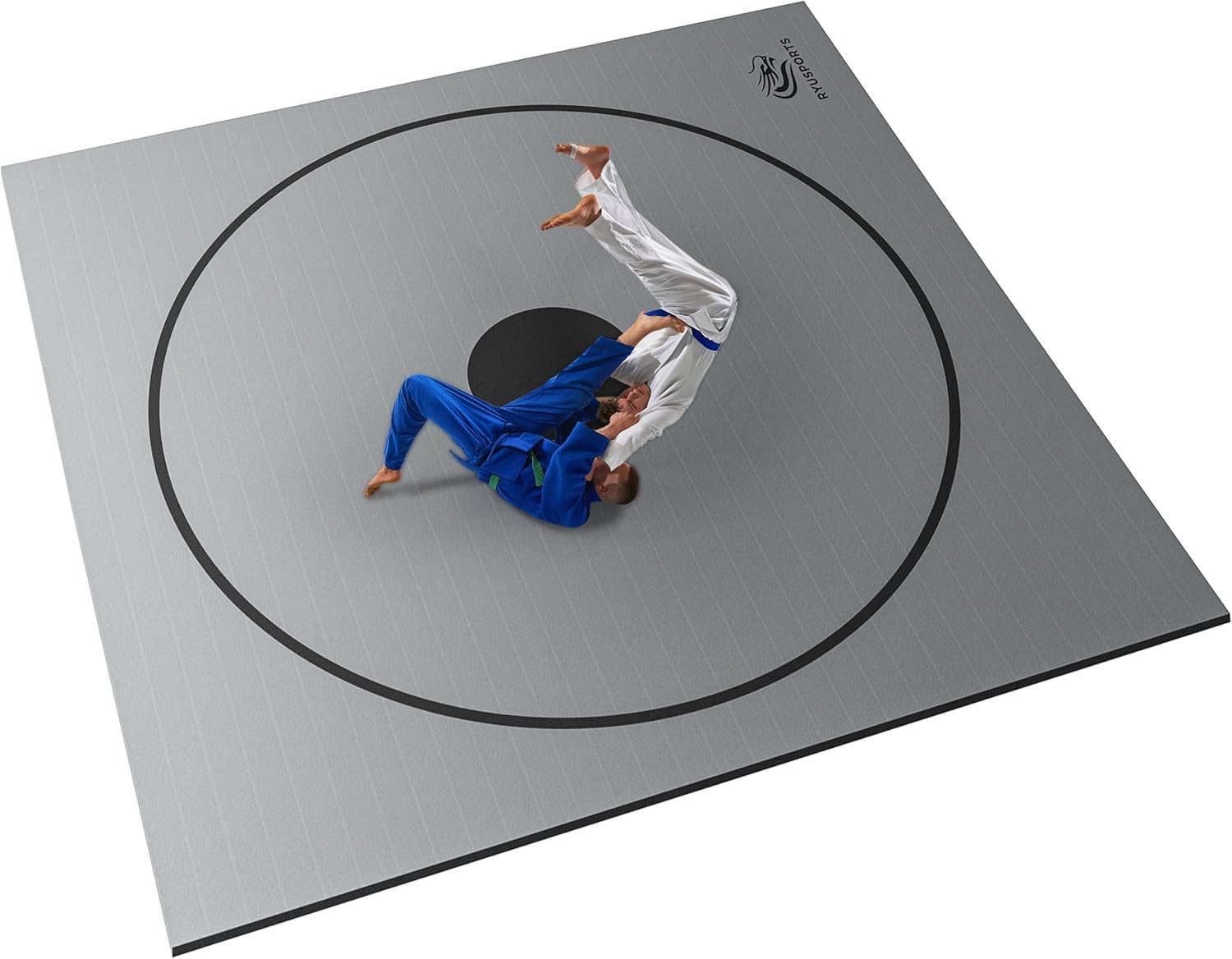
This was the last mat I tested, and I specifically wanted a foam-based foldable option to compare against inflatables. RYUSPORTS uses high-density XPE foam, which is different from both inflatables and roll-out mats.
My Experience
Opening the package, this mat is noticeably heavy at 42 pounds. But that weight translates to stability. Once unfolded on the floor, this thing doesn’t move. At all. Even during intense rolling or takedown practice, it stays planted. That stability changes the training experience significantly.
The 1.25-inch thickness is standard for competition mats. It provides adequate cushioning without feeling too soft. Your movements stay sharp and technical. This is the thickness that prepares you for tournament conditions while still protecting your joints during regular training.
The sealed edges are a detail I really appreciate. Cheaper foam mats have exposed edges that peel and deteriorate. These are fully sealed, which extends the mat’s lifespan considerably. After months of use, there’s zero edge wear or separation happening.
What Stood Out
The fold lines are reinforced, so even with repeated folding, there’s no cracking or weak points developing. This matters for longevity. I’ve had foam mats before where the folds became permanent damage points. Not here. The engineering is thoughtful.
Cleaning is straightforward. The surface resists moisture absorption, so sweat doesn’t soak in and create odor problems. A spray bottle with mat cleaner and a towel keeps it fresh. That’s essential for home training where you’re storing it in living spaces.
The included carry bag actually fits the folded mat properly. That sounds basic, but you’d be surprised how many mats come with bags that barely work. This one has handles and padding, making transport genuinely manageable despite the weight.
What It’s Best For
Home practitioners who want maximum stability and don’t need to move the mat frequently. If you’re setting up a semi-permanent training space in a garage or spare room, this provides reliable, solid performance. Also great for heavier grapplers who need a mat that won’t shift under weight.
Honest Drawbacks
The 42-pound weight is real. Moving this around regularly gets old fast. It’s not something you’ll want to set up and break down daily. Also, when folded, it’s bulky. You need dedicated storage space. The thickness, while good for protection, means it takes up more room than thinner alternatives.
My Verdict
This is a workhorse mat for serious home training. The stability and durability justify the weight penalty if you have a dedicated space. I recommend this when someone wants a traditional foam mat feel with folding convenience for occasional storage.
I’ve learned these lessons through trial and error, so you don’t have to.
Clean your mat after every training session, not weekly. It takes two minutes and prevents bacteria buildup. I keep a spray bottle of mat cleaner and a microfiber towel right next to my training area. Wipe down, let air dry, done. This simple habit extends mat life significantly and keeps your training environment healthy.
For inflatable mats, never use harsh chemicals. They can degrade PVC over time. Mild soap and water work perfectly. For foam mats, ensure they’re completely dry before folding. Trapped moisture creates mold, and mold ruins mats fast.
Inflatable mats should be deflated and stored in their bags away from direct sunlight. UV exposure degrades PVC faster than anything else. I learned this the hard way with my first inflatable mat. Keep them in a closet or storage area, not a sunny garage corner.
Foam mats should be stored flat if possible. If you must fold them, alternate the fold direction occasionally. This prevents permanent creasing in one spot. Also, don’t stack heavy items on folded mats. The compression can damage the foam structure over time.
Watch for compression that doesn’t bounce back. If you press into the mat and it stays indented, the cushioning is degrading. This usually happens after years of regular use, not months. Also, any tears or punctures in the surface mean it’s time to replace. Trying to repair these rarely works long-term.
Inflatable mats that won’t hold air anymore are obviously done. But before replacing, check the valve system. Sometimes it’s just a loose valve, not a leak in the mat itself. That’s an easy fix that can save you money.
Let me break this down based on different training scenarios I’ve encountered.
The FBSPORT inflatable mat wins here. It’s the lightest, packs smallest, and sets up fastest. I’ve taken it on trips multiple times without regret. Just bring a small electric pump (the included one works fine), and you can train anywhere with a relatively flat surface.
The Dollamur roll-out mat is my top pick for permanent or semi-permanent setups. It’s what professional academies use, and it delivers that authentic training experience. If you’ve got the space and don’t need to move it often, this is the best investment for serious training.
The FINCOME inflatable mat offers the best balance of quality and portability for limited space. It deflates small enough to tuck under a bed or in a closet. The quality is high enough that you’re not sacrificing training quality for convenience. This is what I’d choose if I lived in a small apartment and needed to clear space regularly.
The larger RYUSPORTS foam mat provides the most stable platform for multiple people training simultaneously. The 10×10 size accommodates teaching scenarios or group drilling sessions. It’s heavy, but if you’re hosting regular training sessions at home, that stability matters more than portability.
Among these tested mats, the FAHKNS offers solid performance at a competitive value point. It doesn’t have the premium features of more expensive options, but it performs reliably for regular training. This is where I’d start if budget is the primary concern and you want a functional training surface without extras.
I’ve made plenty of mistakes choosing and using BJJ mats. Save yourself the trouble.
Your first instinct is probably to buy the smallest mat that seems workable. Don’t. Training on a mat that’s too small means constantly adjusting position, hitting edges, and limiting your movement. Go bigger than you think you need. You’ll appreciate the extra space immediately.
If you’re primarily working guard and ground positions, 1.25 inches is fine. But if your game involves a lot of takedowns, throws, or stand-up work, get at least 2 inches, preferably 4. Your joints will thank you. This is especially important for older grapplers or anyone with previous injuries.
This sounds silly, but check for ceiling fans or low-hanging lights before setting up your training area. I’ve seen people bust knuckles on ceiling fans during arm bars. Not fun. Make sure your training space is clear of overhead obstacles.
The best folding BJJ mats balance portability, protection, and durability for your specific needs. Through extensive testing, I’ve found excellent options across different price points and styles.
Whether you choose an inflatable mat for maximum portability or a traditional foam mat for stability, these recommendations offer reliable performance.
Consider your training frequency, available space, and budget to select the right grappling mat for your home practice.